Features 01
Expected Problems
・ We didn't realize the liquid level was rising, and production was reduced by operational abnormalities.
・ We're having furnace heat and permeability problems that just don't get any better (in some cases, a rise in the liquid level is the root cause).
Features 02
Technology highlight
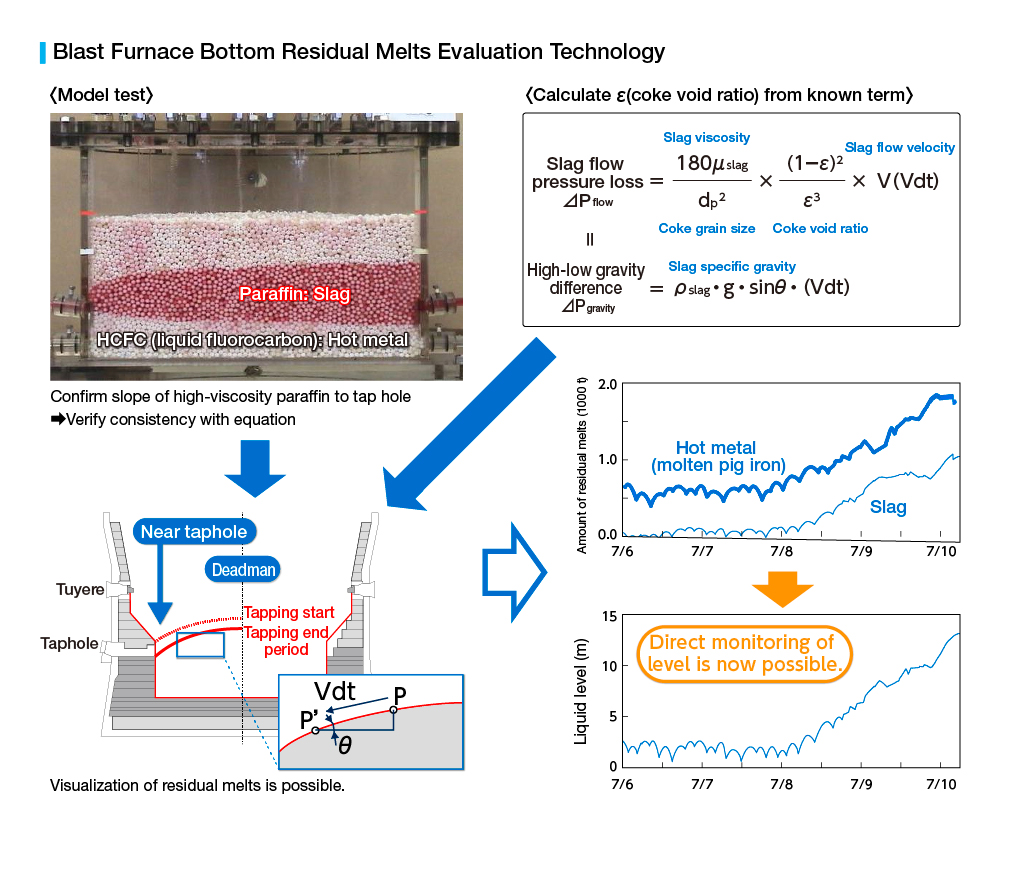
Modelling of the condition in the blast furnace bottom based on model tests in JFE Steel. Calculation of the coke void ratio (see following equation) in the deadman part from the pressure balance in blast furnace bottom. Estimation of the effective volume of the hearth enables direct monitoring of the liquid surface height (= liquid level) of residual melts, which was not possible by conventional residual melts management techniques.
Features 03
Proposed Solutions (Examples)
This model has been applied to all blast furnaces in JFE Steel, improving the residual melts management method from "trend of amount" to "trend of liquid level."
The liquid level can now be known on-line, contributing to suppression of operational problems associated with abnormal rise of the liquid level.
Links 01
Other Solutions